
Minor Salivary Gland Biopsy
This leaflet provides information about minor salivary gland biopsy, its purpose, what to expect before, during, and after the procedure, and potential risks and complications. It is designed to help you understand the procedure and make informed decisions about your care. Please do not hesitate to discuss any questions or concerns with your surgeon or healthcare team.
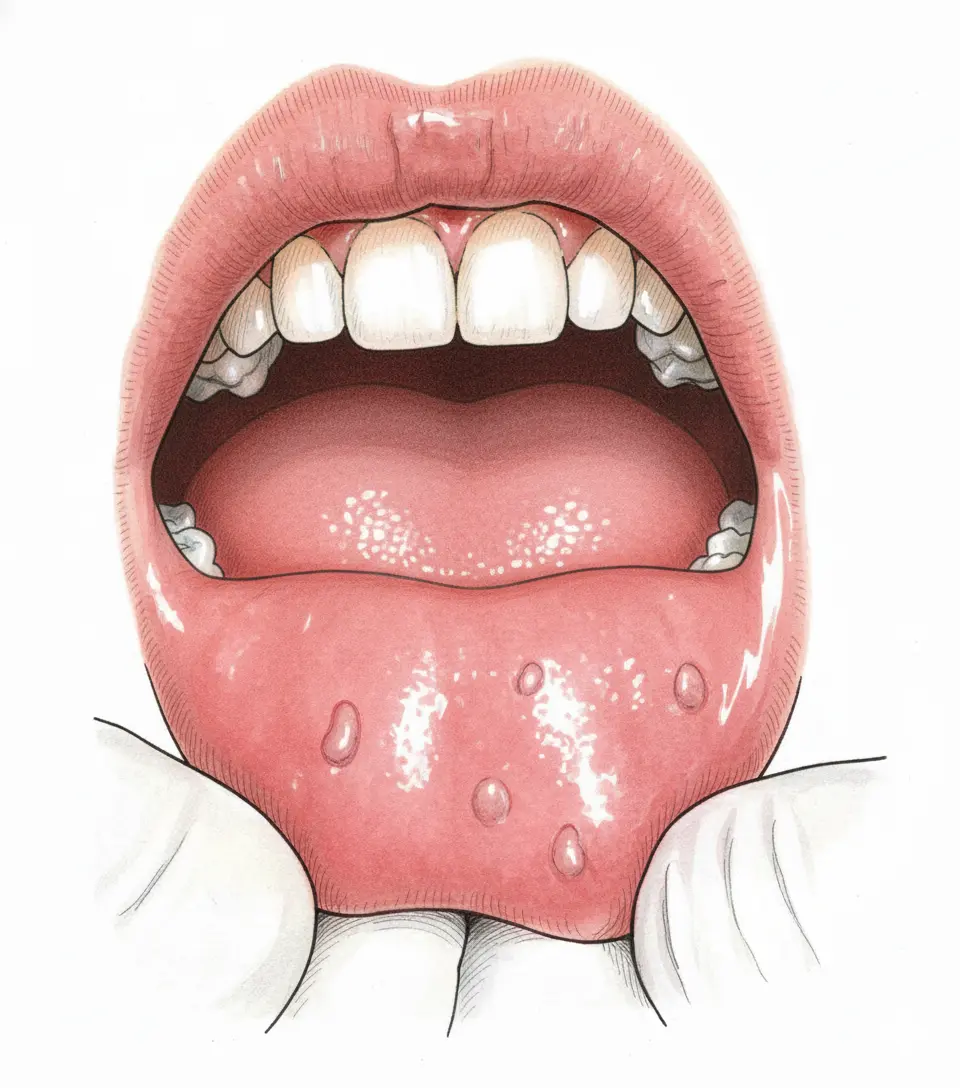
What are Minor Salivary Glands?
While you have major salivary glands (like the parotid) on the side of your face, you also have hundreds of tiny minor salivary glands distributed throughout your mouth.
- Location: They are found just beneath the surface of the lining of your mouth, lips, cheeks, and palate.
- Function: They produce a small amount of saliva (about 10% of your total saliva) to help keep the mouth moist and lubricated.
- Appearance: They are often described as feeling like small "cobblestones" or "peppercorns" when you run your tongue along the inside of your lower lip.
Why Might I Need a Minor Salivary Gland Biopsy?
Your rheumatologist or surgeon has recommended this procedure to help diagnose a systemic condition, most commonly Sjögren’s Syndrome.
- Diagnosis of Sjögren’s Syndrome: This is an autoimmune condition where the body’s immune system attacks the moisture-producing glands, causing dry eyes and dry mouth. Blood tests for this condition are not always definitive (they can be negative in 30–70% of patients).
- Assessing Inflammation: By removing a few of these tiny glands and examining them under a microscope, a pathologist can look for specific patterns of inflammation (clusters of white blood cells) to confirm the diagnosis.
- Excluding Other Conditions: The biopsy can also help rule out other conditions such as sarcoidosis, amyloidosis, or lymphoma.
What Happens Before the Procedure?
Before your biopsy, your surgeon will conduct a brief evaluation. This may involve:
- Medical History Review: The team will review your medical history and current medications.
- Medication Adjustment: It is crucial to inform the team if you are taking any blood-thinning medications (such as warfarin, aspirin, clopidogrel, or apixaban) or herbal supplements that might affect bleeding. You may need to adjust these prior to the appointment.
- Eating and Drinking: Since this procedure is performed under local anaesthesia, you typically do not need to fast. You may eat a light meal beforehand.
What Happens During the Procedure?
The procedure is performed under local anaesthesia (you will be awake) and usually takes about 15–20 minutes.
- Anaesthesia: A small injection is administered to numb the lower lip. This may sting for a few seconds, but the area will quickly become completely numb. You will feel movement during the surgery, but no pain.
- The Incision: A small incision (less than 1.5 cm) is made on the inside of the lower lip. This is done inside the mouth, so there will be no visible scar on the face.
- The Biopsy: The surgeon will gently remove 4 to 7 tiny salivary glands through this incision.
- Closure: The incision is closed with dissolvable stitches (sutures). These usually fall out or dissolve on their own after 10–14 days.
What Happens After the Procedure?
You can usually go home immediately after the procedure.
- Numbness: The lip will remain numb for a few hours. Be very careful not to bite your lip while eating or drinking during this time, as you will not feel it.
- Pain Management: Once the anaesthetic wears off, you may experience some soreness or discomfort. Simple over-the-counter painkillers like Paracetamol or Ibuprofen are usually sufficient.
- Swelling: It is normal for the lip to swell slightly. This usually peaks 2–3 days after the procedure and then settles.
- Wound Care: To reduce swelling and aid healing in the first 24 hours, you should avoid:
- Hot foods and drinks.
- Alcohol.
- Strenuous exercise.
- Touching the stitches with your tongue or fingers.
What are the Potential Risks and Complications?
Minor salivary gland biopsy is a safe and routine procedure, but like any surgery, it carries potential risks:
- Numbness (Sensory Change): The biopsy involves working near tiny nerve branches in the lip. Some patients experience a patch of numbness or tingling near the incision site. In most cases, this resolves over a few weeks or months, but in rare cases (approx. 1–2%), a small area of numbness can be permanent.
- Bleeding: A small amount of oozing is normal. If the wound bleeds after you get home, apply firm pressure with a clean, damp handkerchief or gauze for 10 minutes without checking. If bleeding persists, please contact the hospital.
- Scarring/Lumpiness: As the inside of the lip heals, it may feel "lumpy" or hard for a few weeks. This is scar tissue and will soften and flatten over time.
- Infection: This is rare. If the lip becomes very red, hot, or discharges fluid days after the surgery, you may require antibiotics.
Long-Term Outlook (The Results)
The tissue removed will be sent to a specialist pathologist for analysis.
- The Focus Score: The pathologist counts the number of inflammatory cell clusters (foci) in the glands. A specific "Focus Score" helps confirm or rule out Sjögren’s Syndrome.
- Follow-Up: Results typically take 1 to 2 weeks to return. Your surgeon or referring rheumatologist will discuss the findings with you and explain how they influence your treatment plan.
Recovery and Returning to Normal Activities
Recovery is usually very quick.
- Work: Most patients are able to return to work either later the same day or the following day, depending on how they feel.
- Diet: Stick to a soft, cool diet for the first 24 hours. You can resume a normal diet once the numbness has completely worn off and the soreness has settled.